From First Call to Final Walkthrough in Lincoln Park
Active losses in Lincoln Park get the same dispatch protocol as any other call into our Pequannock Township base. Real human on the line, address + cause + access captured in the first 90 seconds, truck rolling within 10 minutes. The information layer is thin on purpose — the people who answer the phone are the people who decide what gets loaded onto the truck.
Active emergency response — water actively intruding, fire just extinguished, sewage actively backing up — runs to a sub-hour on-site target across our service area. From our Pequannock Township dispatch base, Lincoln Park is about 2 miles out — typically a 10-20 minute drive depending on traffic. During storm windows we pre-stage extraction and drying equipment so the response stays sub-hour even when calls stack up.
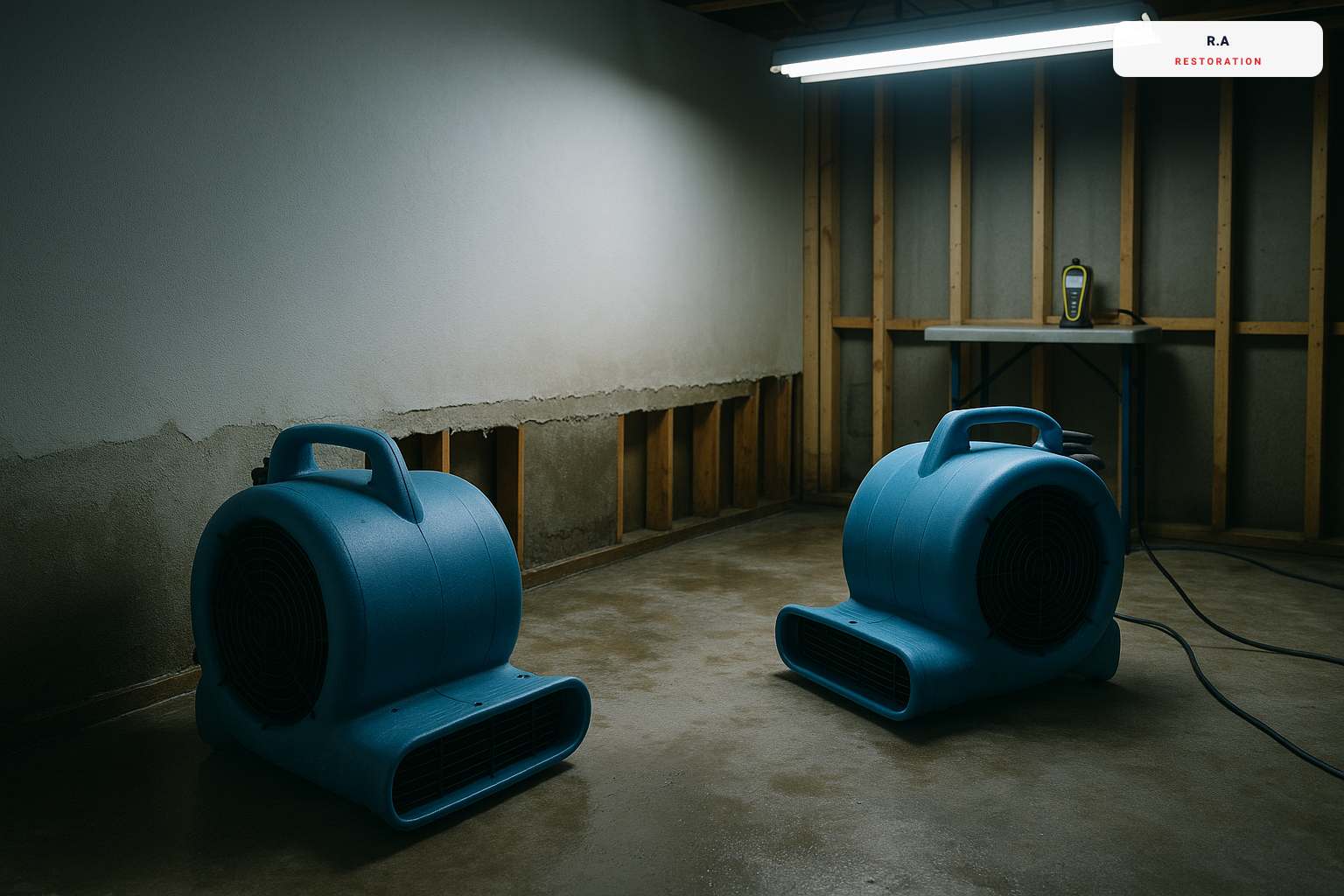
On-site protocol runs the same on every job: stop the source first, then document, then deploy equipment. Source-control means water off at the supply, electrical isolated where wet, Cat-3 areas contained. Documentation means photos of every wet surface and moisture readings of every substrate before equipment goes down. Equipment means air movers and dehumidifiers sized to the affected square footage. Daily monitoring visits log progress until each substrate hits dry-standard. Same crew handles the rebuild on the back end.
Insurance documentation in Morris County
Most of our Lincoln Park work is insurance-billed. We document moisture readings against a building diagram, photograph every wet surface before equipment goes down, write Xactimate scopes the adjuster can settle without a callback, and bill carriers directly when authorized. The cause-of-loss narrative we write determines which policy bucket the claim lands in — homeowners (sudden + accidental), NFIP (true flood from rising water), or sewer/water backup endorsement (combined-sewer-overflow events) — so getting that documentation right at hour one is what determines whether the claim closes cleanly or drags through arbitration.